
Daily Income and Happiness Study: In today’s fast-paced world, where financial pressure weighs heavy on so many shoulders, the age-old question keeps coming back: Does more money really make people happier? The answer, according to a growing body of research, is both yes and no — depending on how you define happiness and how much money you’re talking about. When the Daily Income and Happiness Study from prominent institutions like Harvard University, Princeton, and UPenn is mentioned, it usually refers to the ongoing exploration of how income affects not just our standard of living, but our emotional well-being and life satisfaction. And the results are fascinating — sometimes surprising.
This article will walk you through the findings, bust myths, and explain how much money you really need to be happy — based on the latest science, economics, and psychology. We’ll also share practical steps to build happiness regardless of your income level.
Table of Contents
Daily Income and Happiness Study
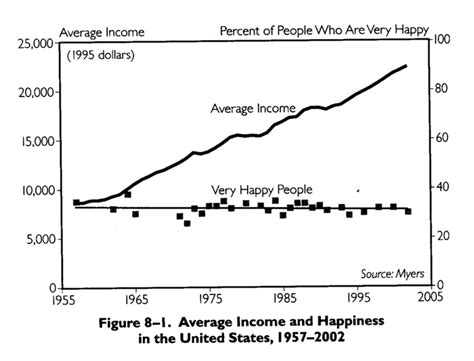
The link between daily income and happiness is complex — and deeply human. While income certainly influences well-being by reducing stress and opening up life choices, it is not the whole story. Research consistently shows that relationships, purpose, time autonomy, and health matter even more in the long run. The exact number that “buys” happiness is flexible. For some, it might be $75,000. For others, $100,000 or more. But the universal truth is this: money is a tool — not the destination. The happiest people use their resources not just to earn more, but to live more intentionally, love more freely, and connect more deeply.
| Topic | Key Findings / Data |
|---|---|
| Money & Happiness Threshold | Emotional well-being rises with income until about $75,000/year |
| Rising Satisfaction | Life satisfaction continues increasing beyond $200,000 for many |
| Emotional Plateau Varies | Most people continue seeing happiness gains past $100,000 |
| Long-Term Happiness Drivers | Relationships are the #1 factor in life-long happiness |
| Inequality’s Impact | Higher income inequality increases the role of income in happiness |
Understanding Happiness: Not One-Size-Fits-All
Before diving into numbers, let’s get clear on what “happiness” really means in science. Most studies split it into two parts:
- Emotional Well-Being: This refers to how good you feel on a daily basis — joy, stress, anxiety, excitement, sadness.
- Life Satisfaction: This is a more reflective judgment — “Am I living a good life overall?”
Some folks might feel good day to day but still feel stuck long term. Others might feel overwhelmed in the moment but satisfied with their life’s direction. When scientists measure “happiness,” they often separate these two.
This is important because income affects them differently. That’s where the famous $75,000 threshold first emerged.
Where the $75,000 Number Came From?
Back in 2010, Nobel Prize winner Daniel Kahneman and economist Angus Deaton published a study that went viral. They found that:
- Emotional well-being rises with income — but plateaus at around $75,000 per year (in U.S. dollars).
- After that point, people’s day-to-day feelings didn’t get significantly better with more money.
- However, life satisfaction continued to rise with income, even past that.
In short: Money helped with stress, bills, and freedom, but didn’t necessarily buy joy after basic needs were met.
This became widely cited — the “magic number” of $75k popped up everywhere from morning news shows to finance blogs.
But Wait — Newer Studies Say That’s Not the Whole Picture
In 2021, research by psychologist Matthew Killingsworth challenged the $75k plateau idea. Using a much larger dataset and real-time mood tracking, his team found that:
- Happiness keeps increasing with income — even beyond $200,000.
- There is no clear upper limit, though the rate of increase slows down.
- The effect depends on personality, emotional intelligence, and how people use their money.
This means the $75,000 limit is not universal. For many, especially those who are driven, optimistic, or self-aware, money continues to impact happiness beyond that line.
So which study is right? The truth lies in the middle.
Different People, Different Responses to Money
Killingsworth’s follow-up work introduced the idea that people fall into different groups:
- For some, happiness plateaus around $100,000 (those more prone to emotional challenges).
- For others, happiness grows steadily with every raise.
- About 85% of participants showed no ceiling in income-related happiness.
That’s a big shift in how we think about money and mood.
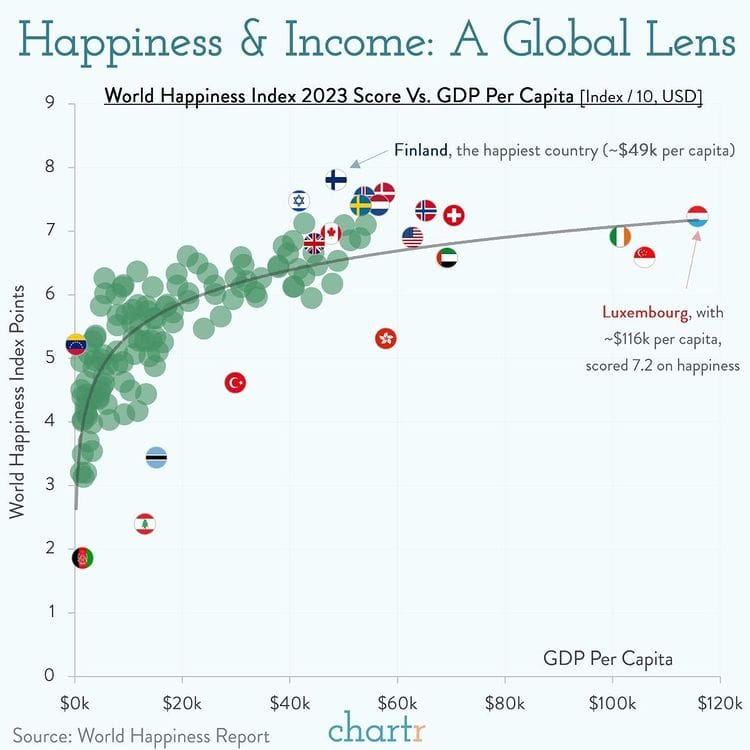
It also raises questions about what type of spending leads to happiness: Buying time, experiences, helping others, or reducing daily friction (like commuting or childcare) tends to deliver more lasting joy than just buying “stuff.”
Daily Income and Happiness Study: What Really Matters Long Term
Now let’s turn to one of the longest, most respected studies on happiness: The Harvard Study of Adult Development.
Running since 1938, it has followed hundreds of people from their youth into old age. Its findings are simple — yet powerful:
- The quality of your relationships is the best predictor of health, happiness, and longevity.
- Close friendships, strong family bonds, and community involvement matter more than wealth or fame.
- People who were socially connected at age 50 were happier and healthier at 80.
So while income matters, it’s not the core foundation of a good life. In fact, some high-income individuals in the study were less happy if their personal lives were cold, lonely, or disconnected.
Why Money Still Matters — But Has Limits
Let’s be clear: Money isn’t irrelevant. It plays a huge role in:
- Reducing chronic stress from food insecurity, housing instability, and healthcare.
- Providing access to safe neighborhoods, better schools, and career options.
- Increasing control over one’s time and lifestyle.
But research consistently shows that once you pass a certain comfort level, more money has diminishing emotional returns. After your basic needs and security are covered, the happiness boost per extra dollar is much smaller.
In economic terms, this is called diminishing marginal utility — each extra dollar is less valuable emotionally than the last.
Cultural and Global Considerations on Daily Income and Happiness Study
Another layer: where you live matters.
- In wealthy, high-cost cities like New York or San Francisco, $75,000 may not stretch far — so emotional benefits might continue past that.
- In rural or low-cost areas, $75,000 might buy much more peace of mind.
- Countries with strong social safety nets may show weaker links between income and happiness.
Income also plays a bigger happiness role in places with high inequality, where falling behind socially can cause stress and insecurity.
Practical Guide: How to Build Happiness with or Without a High Income
1. Cover Your Basics First
Before anything else, ensure your income supports your:
- Rent or mortgage
- Food and utilities
- Healthcare
- Emergency savings
Financial security is the first layer of well-being.
2. Spend on Time, Not Things
Buy back your time by:
- Outsourcing chores you hate
- Reducing commute time
- Taking mental health days
Time wealth is a happiness multiplier.
3. Invest in Experiences
Trips, concerts, hikes with friends — these create lasting memories and deeper emotional impact than material purchases.
4. Give Generously
Helping others boosts happiness — both for the giver and the receiver. It creates a sense of purpose and connection.
5. Prioritize Relationships
Stay in touch with old friends. Build new ones. Call your siblings. Make time for those you care about. People are the best investment.
6. Know Your “Enough”
Understanding your own happiness threshold — not society’s — is key. Define what’s enough for you and aim for financial stability over endless chasing.
Harvard Confirms It: This Exact Daily Income Level Is Linked to Higher Happiness
Most Viewers Fail This Lazy Dog Spot-the-Difference Test—Do You Have Sharp Enough Vision?
Only the Most Observant Can Spot All 3 Differences in 12 Seconds; Can You Do It?