
Online silk shopping is booming and so are the traps. Shiny polyester passed off as “pure,” blends pitched as 100%, fake Zari sold like precious metal, and listings hiding behind stolen photos have made the market confusing and costly for buyers. The good news: a few simple checks, a sharper eye for details, and a disciplined buying process can protect your money and ensure you get the saree you actually ordered.

Silk saree scams online typically rely on urgency, vague specs, and manipulated visuals. Slow down and vet before you buy: insist on verifiable certification, inspect macro photos (weave, pallu, selvedge, zari), and benchmark the price against reputable stores. Silk saree scams online crumble when you verify fiber purity, check zari transparently, and avoid sellers who refuse real images or clear return policies.
Table of Contents
5 Common Scams in the Online Silk Saree Market
| Scam Type | How It Works | Red Flags | How To Avoid |
|---|---|---|---|
| Polyester/viscose sold as “pure silk” | Synthetics marketed as silk to cut costs | Ultra-glossy, plasticky shine; heat-retaining feel; “art silk” framed as pure | Demand recognized silk certification; compare price bands; request macro images |
| Blends misrepresented as 100% silk | Polyester/viscose-silk blends labeled “pure” | Missing fiber percentages; evasive answers on composition | Buy where fiber % is disclosed on invoice; ensure easy returns |
| Fake/low-grade zari as precious | Copper or polyester-core metallics sold as silver/gold zari | Uniform brassy glare; stiff hand; scratch reveals base | Ask exact zari type; use a gentle scratch on a loose end; check natural-light video |
| Stolen/stock photos | Catalog or lifted images hide inferior deliveries | No close-ups of weave, border, pallu, selvedge | Prefer listings with macro shots, buyer photos, and short daylight videos |
| Counterfeit certification tags | Fake tags mimic official purity labels | Poor hologram, no serial/QR, mismatch with seller | Verify serial/QR; match tag details with seller identity |
Most online silk saree disappointments trace back to two issues: mislabeling fabrics and disguising Zari. Beat both with a consistent routine verify certification and composition, scrutinize real images and a short daylight video, benchmark price and specs across reputable shops, and keep a small authenticity test in reserve when the stakes are high. The extra five minutes you invest before checkout can be the difference between a forgettable impulse buy and a timeless saree worthy of your wardrobe.
Why Silk Gets Faked Online
- Economics: Raising silkworms, reeling, dyeing, and weaving real silk is expensive. Mislabeling polyester or viscose as pure silk creates easy margins for unscrupulous sellers.
- Brand gravity: Names like Kanjivaram and Banarasi command premium pricing; scammers lean on these labels while quietly substituting blends or machine-made fabric.
- Image-first e-commerce: Heavily edited model shots and stock visuals can mask texture, weave irregularities, and imitation zari—especially on marketplaces where listings change often.
Five Common Scams and How To Avoid Them
- “Art Silk” Dressed Up as Pure
- The con: Polyester or viscose marketed as “pure silk,” banking on high sheen and camera-friendly drape.
- Spot it: Glassy, uniform shine; slippery-plasticky touch; suspiciously low “festival deal” prices for premium weaves.
- Avoid it: Ask for recognized silk certification on the product; compare price ranges across 3–5 trusted shops; request close-ups of the warp-weft texture and a daylight video.
- Blends Misrepresented as 100% Silk
- The con: 70–90% synthetic blends sold as “pure” to justify premium positioning without premium cost.
- Spot it: No fiber percentages on the listing or invoice; vague terms like “silk look,” “soft silk,” or “silk finish” with no composition details.
- Avoid it: Insist on explicit fiber composition (e.g., 100% mulberry silk) and save the invoice; favor stores with transparent return policies and verified buyer photos.
- Imitation Zari Passed Off as Precious
- The con: Copper- or polyester-core metallic threads pitched as real silver/gold zari, especially in Banarasi and Kanjivaram.
- Spot it: Harsh, uniform brassy glare; stiff or scratchy feel; a gentle scratch on a loose thread reveals a different core color.
- Avoid it: Ask for the zari type (tested silver/gold vs tested copper/poly); check natural-light images; for heirloom-grade buys, have it inspected during the return window.
- Stolen Images and Vague Listings
- The con: Sellers lift artisan photos, then ship mass-produced, chemically finished sarees that look similar only in edited catalog shots.
- Spot it: Only model or catalog images, no macro shots of the weave, pallu, border, or selvedge; thin descriptions and weak contact details.
- Avoid it: Prefer shops that show real, zoomable images and short videos; ask for additional images on request; verify address, phone, and return policy.
- Counterfeit Certification and Tag Games
- The con: Fake “authenticity” labels mimic official marks but lack verifiable holograms, serials, or QR codes that link to the seller.
- Spot it: Spelling inconsistencies, dull or misaligned holograms, serial/QR that doesn’t resolve or mismatches the retailer.
- Avoid it: Inspect the label’s security features; scan and confirm serial/QR; ensure the seller’s identity matches the tag metadata.
Authenticity Checks That Actually Work
- Recognized Silk Certification: Use certification as a first filter, especially on premium silk. Examine the hologram, serial, and if present QR features. Verify that the seller identity matches what the tag returns.
- Burn Behavior (on a loose thread only): Real silk burns slowly, may self-extinguish, smells like burnt hair, and leaves fragile, crushable ash. Synthetics melt, bead, and smell chemical. Never test on the main fabric; request a spare thread or sample.
- Touch, Lustre, Weave: Genuine silk feels soft with a subtle crisp bite; it shows a multi-tonal, prismatic lustre that changes with light. The weave will display slight, natural variations—too-perfect regularity often suggests machine-made synthetics.
- Water Interaction (optional check): A tiny droplet on real silk tends to absorb rather than sit like a bead on the surface; use sparingly and safely.
- Zari Verification: Under natural light, authentic zari glows rather than glares. If permitted, a careful scratch on a concealed end may reveal the core; imitation often shows copper or white synthetic. Precious-metal threads won’t behave like plated yarns.
- Photo and Video Scrutiny: Demand macro images of the border, pallu, motifs, and selvedge. Ask for a short video under daylight, moving the fabric to observe lustre shift and texture integrity.
Buying Smarter Online: A Practical Checklist
- Confirm Certification and Composition
- Look for recognized silk certification on the product page and packaging.
- Ensure fiber composition (e.g., 100% mulberry silk) appears on the listing and invoice.
- Demand Real Visuals
- Macro photos of weave, motifs, pallu, border, and selvedge.
- Short daylight videos showing drape, lustre shift, and zari behavior.
- Benchmark Before You Buy
- For the same weave (e.g., Kanjivaram, Banarasi), compare 3–5 reputable sellers for price, weight, yarn count, and weave density.
- Outlier pricing—especially far below market—calls for extra verification or a pass.
- Audit Seller Signals
- Clear contact details, real customer photos, and a credible return policy.
- Independent reviews on third-party sites and organic social proof.
- Keep a Safe Test in Reserve
- Request a spare thread or tiny sample for burn behavior if you’re spending on heirloom-grade pieces.
- If authenticity is critical, plan an expert verification within the return window.
- Payments and Protection
- Use secure payment gateways and avoid transfers to personal UPI/QR for first-time sellers.
- Keep screenshots of the listing, chat, and invoice; these help in disputes and returns.
Silk saree scams online are easiest to beat when you rely on verifiable proof over promises: certification that checks out, composition written on the invoice, and images that show weave truth. Don’t let urgency push a purchase—ask for close-ups, a quick natural-light video, and clarity on zari type and return policies. Silk saree scams online lose their power the moment you insist on transparency and take two minutes to benchmark prices and specs across trusted stores.
How To Use Certification The Right Way
- Inspect the label’s security features crisp hologram, unique serial, and scannable code if present.
- Verify that the tag details map to the actual seller or brand you’re buying from.
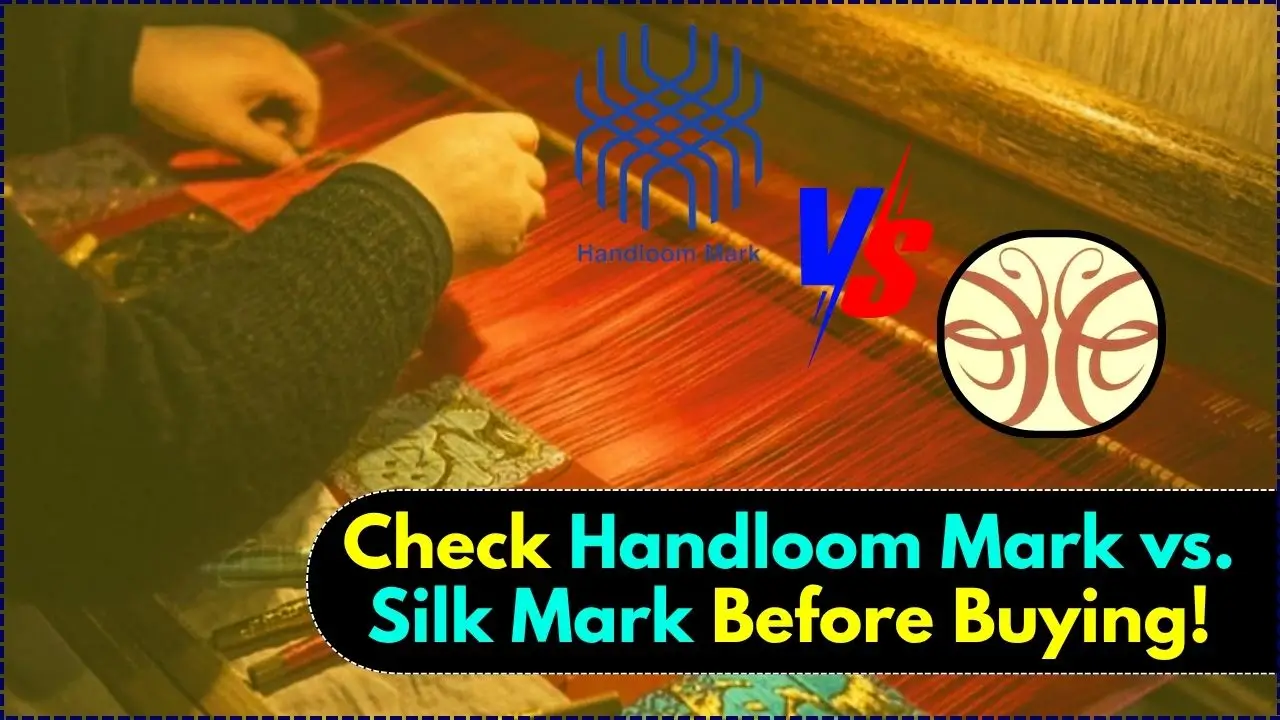
- Remember: certification vouches for fiber purity; it does not automatically guarantee handloom status. If you want handwoven, look for the appropriate handloom identifier in addition to silk purity.
Zari Due Diligence, Simplified
- Real zari has a soft, elegant glow under natural light and adds weight without feeling plasticky.
- Imitation zari often appears too yellow, too shiny, and stiff on borders; a careful scratch may reveal a copper or synthetic core.
- When buying a premium Banarasi or Kanjivaram, ask for a macro of the zari threads and reverse side; genuine sellers are comfortable sharing.
Price, Weight, and “Too Good To Be True”
- Real silk has a market floor. If a “pure” Kanjivaram or Banarasi is listed far below the common range, expect a blend or synthetic.
- Some sellers load fabric with chemicals or metallics to create the illusion of weight. Compare the saree’s listed weight with norms for the weave, and ask about yarn count and weave density.
- Lightweight does not equal low quality for certain weaves—know the expected range for your target style to avoid both overpaying and being misled.
Quick Red-Flag Scanner Before Checkout
- Only catalog or model photos, no macro close-ups.
- Vague composition language, missing fiber percentages.
- No independent reviews, unclear contact details, hard-to-find return policy.
- Pricing well below reputable competitors for the same weave and spec.
- Resistance to providing additional images or a short video on request.
FAQ on 5 Common Scams in the Online Silk Saree Market
Is the burn test safe for sarees?
Use it only on a tiny loose thread or a seller-provided sample. Real silk burns slowly with a hair-like smell and crushable ash; synthetics melt and bead with a chemical odor. Never test on the main fabric.
How reliable is certification for silk purity?
It’s a strong first filter when genuine: modern labels feature holograms and unique identifiers. Always verify the tag details align with the seller and the product purchased.
Can a saree carry both purity and handloom identifiers?
Yes. Purity labels confirm silk fiber; handloom identifiers indicate it’s handwoven. A pure handwoven Kanjivaram or Banarasi can carry both when applicable.
What’s the simplest way to avoid fake listings?
Avoid model-only or stock-like images. Ask for macro shots and a short video under daylight, covering border, pallu, motifs, selvedge, and Zari. Sellers who refuse are signaling risk.